
Audiologist or Hearing Aid Doctor: The Essential First Step for Your Hearing Health
If you’re struggling with hearing loss or suspect something’s not quite right with your hearing, knowing where to turn first can feel confusing. Should you book an appointment with an audiologist or head straight to a hearing aid doctor? Both professionals play important roles in hearing healthcare, but understanding their differences will help you make the right decision for your needs.
In this article, we’ll clarify the distinction between the two, explain when to see each, and guide you through the best pathway for your hearing health—all in clear, expert language you can trust.
Understanding the Professionals: Audiologist vs. Hearing Aid Doctor
What is an Audiologist?
An audiologist is a highly trained healthcare professional specialising in diagnosing, treating, and managing hearing and balance disorders. Audiologists typically hold a doctoral degree or equivalent, along with extensive clinical training and licensing. Their expertise goes beyond hearing aid fittings—they’re equipped to identify underlying causes of hearing difficulties, from complex auditory processing disorders to childhood hearing loss and balance problems.
At an audiologist clinic, you’ll receive a comprehensive assessment that may involve advanced diagnostic tests. This can include pure-tone audiometry, speech testing, tympanometry, and more specialised evaluations such as those for balance disorders or tinnitus. Audiologists are uniquely positioned to create tailored treatment plans, recommend suitable devices, and provide ongoing management for complex cases.
What Does a Hearing Aid Doctor Do?
A hearing aid doctor—sometimes known as a hearing aid specialist or dispenser—focuses primarily on assessing hearing loss and fitting hearing aids for adults, especially those with straightforward, age-related changes. While the title may sound medical, hearing aid doctors are not medically qualified in the same way as audiologists.
Their training usually centres on performing basic hearing tests, interpreting results, and ensuring patients are matched with suitable hearing aids. They’re knowledgeable in the technology, maintenance, and adjustment of these devices, making them invaluable when it comes to helping you hear better in day-to-day life. However, their expertise is generally limited to adult hearing loss that doesn’t have an underlying medical cause.
Key Differences at a Glance
To help you quickly distinguish between these two professionals, here’s a succinct comparison of their core attributes:
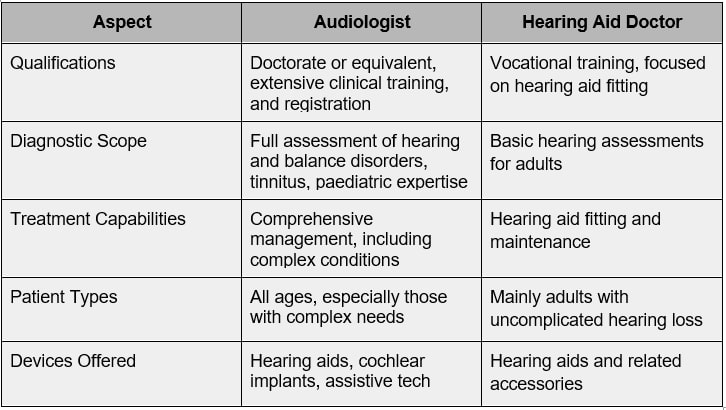
Each professional plays a crucial role, but their skills and training are designed for different aspects of hearing care.
When to See an Audiologist
Complex Symptoms and Underlying Conditions
If your hearing loss comes with additional symptoms—such as persistent tinnitus, dizziness, or sudden changes in your ability to hear—your first port of call should be an audiologist clinic. Audiologists are equipped to perform thorough diagnostic tests that can reveal underlying causes, some of which may require medical intervention. If, for example, your hearing loss is due to a problem with the auditory nerve or you experience recurring vertigo, the audiologist will ensure you receive the appropriate treatment or referral.
Children and Special Populations
For infants, children, and anyone with unique communication or developmental needs, seeing an audiologist is essential. Children’s hearing requires specialised testing, often involving objective methods like otoacoustic emissions or auditory brainstem response. An audiologist’s advanced training allows for accurate diagnosis and appropriate intervention, ensuring that young people or vulnerable adults get the support they need as early as possible.
Complex Hearing Needs
Those living with complex hearing loss, balance disorders, or who require advanced hearing devices such as cochlear implants, will benefit most from an audiologist’s expertise. Audiologists can create bespoke treatment plans, recommend and programme sophisticated devices, and provide ongoing management for conditions that go far beyond simple hearing loss.
When to See a Hearing Aid Doctor
Straightforward Hearing Loss
If you are an adult experiencing gradual, age-related hearing loss without any additional symptoms, a hearing aid doctor can provide efficient and effective care. These specialists are highly experienced in conducting routine hearing tests and fitting a wide range of modern hearing aids. They can advise on styles, features, and usage, helping you regain confidence in social and professional environments.
Ongoing Device Support
Hearing aid doctors excel at aftercare. If you already use hearing aids and need adjustments, repairs, or advice on maintenance, a hearing aid specialist is often the best person to see. Their practical experience ensures you get the most out of your device and maintain optimal hearing in everyday situations.
Care Pathways and Referrals
Typical Patient Journey
Most individuals begin their hearing care journey at their GP or by directly approaching an audiologist clinic. For complex or unclear symptoms, GPs often refer patients to an audiologist for a thorough diagnostic workup. After assessment, the audiologist may determine that a hearing aid is appropriate, and the next step could involve a hearing aid doctor for device selection and fitting.
In cases of uncomplicated, age-related hearing loss, some patients may choose to visit a hearing aid doctor directly, especially if they want immediate help with device fitting. However, if a hearing aid specialist encounters anything unusual during testing—such as unexpected results or additional symptoms—they should refer the patient to an audiologist for further investigation.
Collaborative Approach
It’s not uncommon for both professionals to be involved in your hearing care. For example, an audiologist may conduct your initial assessment and diagnosis, then refer you to a hearing aid doctor for ongoing device support and follow-up appointments. The best outcomes occur when both specialists work together, ensuring all aspects of your hearing health are addressed.
Final Guidance: Making the Best First Step
When deciding whether to see an audiologist or a hearing aid doctor first, consider your symptoms, age, and the complexity of your needs. If you experience additional symptoms such as tinnitus, balance problems, or a sudden change in hearing, consult an audiologist clinic as your first step. For straightforward, age-related hearing loss without complicating factors, a hearing aid doctor can often provide prompt and effective help.
Ultimately, starting with a professional evaluation—especially when your hearing concerns are new or complex—gives you peace of mind and ensures any underlying issues are properly identified. Remember, hearing care is not one-size-fits-all. Your journey should be tailored to your needs, and it’s perfectly acceptable to involve both types of specialists as part of your ongoing care.
Conclusion
Your hearing health is too important to leave to chance. Understanding the unique roles of the audiologist and the hearing aid doctor helps you navigate the process with confidence. An audiologist clinic offers the depth of expertise needed for complex cases, while hearing aid doctors shine in fitting and supporting hearing devices for straightforward needs. Choose the right professional for your situation, and don’t hesitate to seek a referral or second opinion if you’re unsure. Prioritise your hearing today and take the first step toward clearer communication and a richer, more connected life. Visit the Audiologist Singapore clinic today.