
When to Visit a Hearing Clinic for Your Child’s Hearing Concerns
Children rely on their hearing to learn, connect, and communicate. From the first sounds they respond to as newborns, to the words they use to build friendships in school, good hearing is central to healthy development. Any barrier to hearing can affect speech, learning, and confidence.
An audiologist is the health professional who identifies and manages hearing concerns in children. With the right guidance and timely action, families can ensure their child’s hearing health is protected, and their development supported.
When to Consider an Audiologist
Developmental Signs
If your child is missing speech or listening milestones, it may signal a problem with hearing. For example, toddlers who do not respond consistently to their names, or preschoolers who struggle to follow instructions, may not be hearing clearly. These signs can easily be mistaken for inattention, but they often point to hearing difficulties.
Medical Triggers
Repeated ear infections are one of the most common medical reasons for hearing loss in children. Illnesses like meningitis can also damage hearing. Even if these conditions are clear, their impact can sometimes persist. If your child has a medical history of frequent ear issues or serious illness, arranging a visit to an audiologist clinic is a wise step.
Screening Concerns
Most children are screened for hearing shortly after birth and sometimes again at school. While these screenings are useful, they are not detailed. If your child does not pass a screening or if you still feel unsure about their hearing, an in-depth test at a hearing clinic should be arranged.
Parental Instincts
Parents often notice subtle behaviours before anyone else. If you suspect your child cannot hear well—whether it is needing the television louder, misunderstanding words, or seeming withdrawn—trust your instincts. An audiologist in Singapore or elsewhere can perform comprehensive tests to give you clear answers.
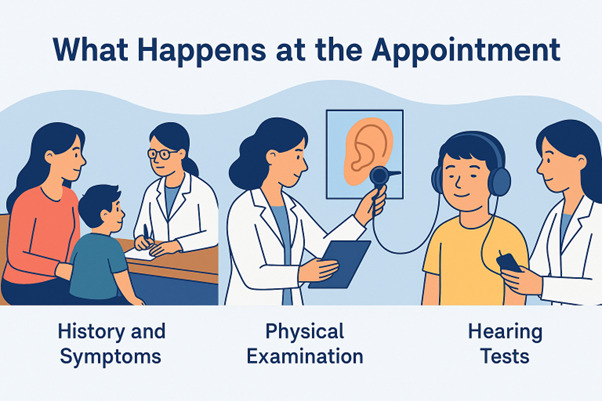
What Happens at the Appointment
Initial Discussion
An audiology visit begins with a conversation. The audiologist will ask about your child’s health history, ear infections, and any behaviours you have observed. This context helps shape which tests are most appropriate.
Ear Examination
The next step is a simple look into your child’s ears. This allows the audiologist to check for blockages, fluid, or signs of infection. A test of middle ear movement may also be done to confirm how well the eardrum is working.
Hearing Tests by Age
Different ages require different testing methods:
- Newborns may undergo an Auditory Brainstem Response (ABR), which records how the hearing nerve reacts to sounds while the baby is asleep.
- Toddlers are often tested using Visual Reinforcement Audiometry (VRA). Sounds are played, and the child is rewarded with a visual cue, such as a toy or puppet, when they turn towards the sound.
- Preschoolers may take part in Conditioned Play Audiometry (CPA). This involves simple games, such as dropping a block into a bucket when a sound is heard.
- School-age children may complete Pure Tone Audiometry, pressing a button or raising a hand when they hear a sound. If processing difficulties are suspected, an auditory processing assessment may also be carried out.
Throughout these assessments, parents are often asked to support and encourage the child, ensuring results are as accurate as possible.
Outcomes and Support Options
Identifying the Issue
The results will show whether your child’s hearing is normal, temporarily affected, or permanently reduced. Temporary problems, such as those caused by fluid in the middle ear, may resolve with treatment. Permanent hearing loss may require long-term support.
Treatment Choices
When hearing support is needed, several options are available:
- Hearing aids: Modern devices amplify sound with clarity and comfort. They can be adapted to many types of hearing loss.
- Bone conduction devices: Suitable for children with conductive hearing loss, these devices deliver sound vibrations directly to the inner ear.
- Cochlear implants: For severe or profound hearing loss, these implants bypass damaged parts of the ear and send sound signals straight to the hearing nerve.
Guidance Beyond Devices
Support does not stop with equipment. An audiologist clinic can provide strategies for teachers to improve classroom listening and advise families on making the home environment more hearing-friendly. In some cases, referrals may be made to speech therapists, ENT specialists, or psychologists for additional support.
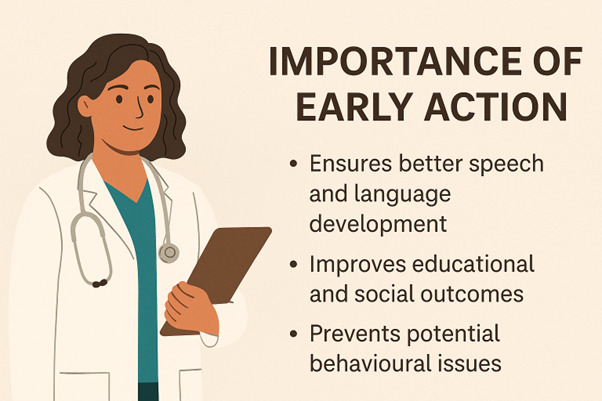
Importance of Early Action
Language and Learning
Hearing directly influences how children learn to speak and understand language. Delayed action can lead to communication struggles, lower academic achievement, and social difficulties. Addressing hearing issues early gives children a fair chance to keep pace with their peers.
Emotional and Social Development
Children who cannot hear well may feel isolated or frustrated. Early diagnosis and support protect not only their language development but also their self-esteem and emotional wellbeing.
Never Too Early
It is never too soon to test a child’s hearing. With today’s technology, reliable assessments can be done at any age. If there is a concern, it is better to act now than to wait.
Conclusion
Hearing health is vital for every child’s growth and confidence. If your child shows signs of difficulty, has a medical history that puts them at risk, or simply leaves you feeling unsure about their hearing, seeking professional advice is essential.
Visiting a hearing clinic provides clarity, reassurance, and when needed, a path to treatment. With the expertise of an audiologist in Singapore or any qualified audiologist worldwide, families can ensure their children are supported to reach their full potential. Trust your instincts, take action early, and give your child the best opportunity to thrive.