
Choosing the Right Hearing Aid in Singapore: What You Need to Know
Hearing loss is more common than most people think, and it can have a profound impact on your ability to communicate, work, and enjoy social activities. For many in Singapore, deciding when and how to seek support is the hardest part. Fortunately, modern technology has made it easier than ever to improve hearing, regain confidence, and reconnect with the world around you.
This comprehensive guide will help you understand your choices when it comes to hearing aid options in Singapore, empowering you to make the best decision for your unique needs.
Assessing Your Hearing Needs
Understanding the Importance of Professional Assessment
If you suspect you might have hearing loss, the most important first step is to schedule a professional assessment with a hearing aid audiologist. Many people try to ignore the signs, hoping the issue will resolve itself, but the reality is that hearing loss can worsen if left unmanaged.
In Singapore, hearing care professionals use specialised equipment to measure your ability to hear different sounds and to identify the type and extent of your hearing loss.
The Main Types of Hearing Loss
Hearing loss in Singapore is categorised by both its cause and its severity. The three principal types are:
- Sensorineural hearing loss: This is the most common type, resulting from damage to the inner ear or auditory nerve. It is usually permanent and often age-related, but can also be caused by exposure to loud noises or certain illnesses.
- Conductive hearing loss: This form occurs when sound is unable to pass efficiently through the outer or middle ear, possibly due to blockages, infections, or structural abnormalities. It is sometimes reversible with medical treatment or surgery.
- Mixed hearing loss: As the name suggests, this is a combination of sensorineural and conductive elements.
An accurate diagnosis from a hearing aid audiologist is vital, as it forms the basis for recommending the most suitable hearing aid Singapore residents can rely on. A comprehensive hearing test not only establishes the type and severity of loss but also rules out underlying medical issues that may need attention.
Hearing Aid Types at a Glance
The world of hearing aids has evolved rapidly, and Singapore’s audiologists offer a wide variety of devices to match every requirement. The right hearing aid for you depends on your lifestyle, the degree of hearing loss, and your cosmetic preferences. Here is a concise overview of the main options available:
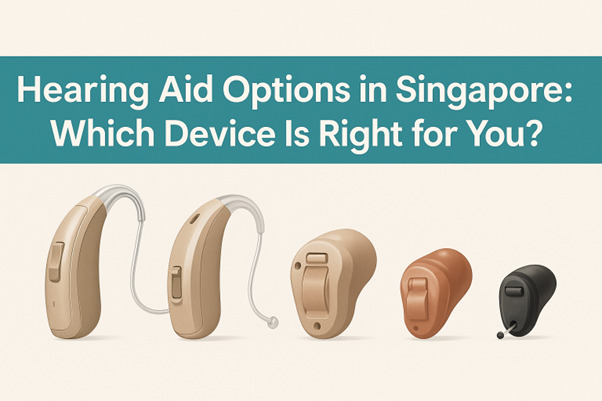
Behind-the-Ear (BTE) and Receiver-in-Canal (RIC)
Behind-the-Ear (BTE)
BTE devices are among the most versatile hearing aids available. They consist of a main body that rests comfortably behind the ear and a thin tube or wire that delivers sound into the ear canal via a custom-moulded earmould or dome. BTE hearing aids are suitable for people with mild to profound hearing loss, thanks to their powerful amplification. These devices are robust and often easier to handle than smaller models, making them a favourite for children and adults with dexterity challenges.
Receiver-in-Canal (RIC)
RIC hearing aids, also known as Receiver-in-the-Ear (RITE), are a more recent innovation. The speaker, or receiver, is placed inside the ear canal, while the rest of the device sits discreetly behind the ear. This design offers a more natural sound experience and is especially effective for those with high-frequency hearing loss. The RIC style is lightweight and less visible than traditional BTE models, offering both comfort and subtlety.
In-the-Ear (ITE)
ITE hearing aids are custom-moulded to fit snugly within the outer ear. They are less conspicuous than BTE models, yet still large enough to be handled easily. This style is a good option for people with mild to severe hearing loss and can include advanced features such as telecoils, volume controls, and wireless connectivity. The slightly larger size of ITE hearing aids allows for a more substantial battery and additional technical features, striking a balance between power and aesthetics.
In-the-Canal (ITC), Completely-in-the-Canal (CIC), and Invisible-in-the-Canal (IIC)
In-the-Canal (ITC)
ITC hearing aids are crafted to fit partially in the ear canal, making them less visible than ITE and BTE models. They can accommodate mild to moderate hearing loss and are often chosen by those who want discretion without sacrificing function.
Completely-in-the-Canal (CIC) and Invisible-in-the-Canal (IIC)
CIC devices fit further into the ear canal, making them almost invisible. IIC hearing aids are the most discreet of all, sitting deeply within the canal and completely hidden from view. These are typically suited to adults with mild to moderate hearing loss and are ideal for those concerned about appearance. The downside to smaller aids is that they are more susceptible to moisture and earwax, especially in Singapore’s humid climate, and they require good manual dexterity for insertion, removal, and battery changes.
Key Features and Technologies
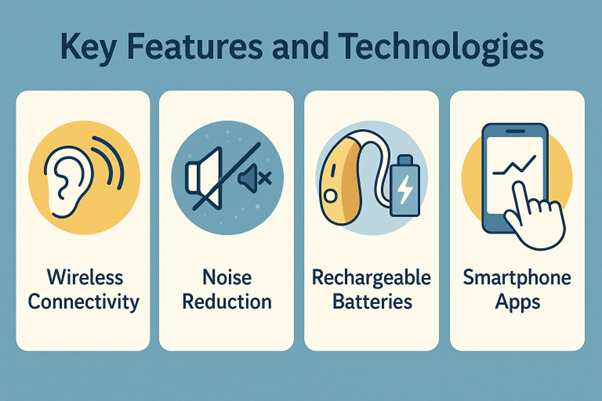
Modern hearing aids are sophisticated devices packed with technology. Understanding these features can help you select the right hearing aid Singapore has to offer.
Digital Signal Processing
All reputable hearing aids today use digital technology to process incoming sounds. This enables the device to amplify speech while reducing background noise, adapting in real time to different environments. The result is clearer, more comfortable listening, especially in social or busy settings.
Noise Reduction and Directional Microphones
One of the main challenges for hearing aid users is dealing with background noise. Advanced digital hearing aids use multi-channel noise reduction algorithms and directional microphones to help you focus on what matters most—usually, the voice directly in front of you. These features are invaluable in restaurants, meetings, and other lively environments.
Wireless Connectivity
Many hearing aids now come equipped with Bluetooth or wireless streaming capabilities. This allows you to connect your hearing aids directly to smartphones, televisions, and computers, transforming them into wireless headphones. With wireless connectivity, making phone calls, watching TV, or listening to music becomes much simpler and clearer.
Rechargeable Batteries
Rechargeable hearing aids are becoming increasingly popular in Singapore. Instead of replacing small batteries every week or two, you simply place your devices in a charging dock overnight. This not only saves time and money but is also more environmentally friendly. A full charge typically lasts a full day, covering all your daily activities with ease.
Choosing the Right Device in Singapore
Selecting a hearing aid goes beyond technical specifications. Local factors and personal circumstances play a crucial role in your final choice.
Climate and Environmental Suitability
Singapore’s hot and humid environment poses unique challenges for hearing aids. Moisture and sweat can damage sensitive electronics if the device isn’t built to cope. When shopping for a hearing aid Singapore users should look for models with robust moisture resistance, protective coatings, or even waterproof ratings. Regular maintenance and cleaning are also essential for prolonging device lifespan in this climate.
Lifestyle Considerations
Think carefully about your daily activities. If you have an active lifestyle, travel frequently, or participate in sports, you may need a hearing aid that is especially durable and secure. For those who spend a lot of time in meetings or public spaces, features such as telecoil compatibility and advanced speech enhancement can be particularly useful.
Manual Dexterity
Some users have limited dexterity due to arthritis or other conditions. In these cases, slightly larger hearing aids—such as BTE or ITE models—are preferable, as they are easier to handle and maintain. Your hearing aid audiologist will help you try out various styles during your assessment, ensuring a comfortable fit.
Local Support and Aftercare
Reliable aftercare is an essential part of hearing aid ownership. In Singapore, leading hearing aid audiologists offer ongoing support, including adjustments, repairs, and cleaning services. This aftercare ensures your hearing aid continues to perform optimally, adapts to any changes in your hearing, and gives you peace of mind.
The Fitting and Follow-Up Process
The fitting process for a hearing aid is much more than just picking a device off the shelf. After your initial hearing assessment, your audiologist will recommend devices that match your clinical and lifestyle needs. You’ll be able to try on different styles to gauge comfort and sound quality.
During the fitting appointment, the hearing aid audiologist will use specialised tools—such as real-ear measurements—to programme your device according to your hearing profile. This ensures that amplification is precisely tailored to your needs, avoiding discomfort or over-amplification.
Follow-up appointments are crucial, especially in the first few weeks. Your brain needs time to adjust to new sounds, and your audiologist will fine-tune the settings to optimise speech clarity and comfort. You will also be taught how to clean your hearing aids, change filters or domes, and use any digital features, such as smartphone connectivity or rechargeable docks.
Regular check-ups help identify and resolve issues early, extending the life of your device and maintaining the best possible hearing experience. Your relationship with your hearing aid audiologist is ongoing—think of it as a partnership dedicated to your long-term hearing health.
Conclusion
Choosing the right hearing aid in Singapore is a personal journey that begins with expert assessment and continues with a careful evaluation of all the available options. With advances in technology and a wide range of styles to suit every need, there is a solution for nearly everyone experiencing hearing loss.
By consulting a qualified hearing aid audiologist, you ensure that your choice is based on sound clinical advice and tailored to your individual requirements. Remember, hearing loss doesn’t have to be a barrier to enjoying life’s conversations, laughter, and everyday sounds. Take the first step today—book an assessment with a hearing clinic and let your journey to better hearing begin.